
Most people never expect to perform CPR. But cardiac arrest can happen anywhere, including offices, warehouses, shops, building sites and cafes. When it does, what happens in the first few minutes, before an ambulance arrives, can make an enormous difference.
That is why having staff with current CPR training is one of the simplest and most valuable safety steps any workplace can take.
Every Minute Counts
When someone’s heart stops, the brain is quickly starved of oxygen. Emergency services may take several minutes to arrive, and during that time, effective CPR helps keep blood and oxygen moving to the brain and vital organs.
A bystander who starts CPR straight away, and uses a defibrillator if one is available, gives the person the best possible chance while help is on the way. Without that early action, the chances of survival drop quickly.
Confidence Is the Real Benefit
Many people say they would want to help but are not sure what to do or are afraid of doing it wrong. Training changes that. A good CPR course gives people the hands-on practice to recognise an emergency, call for help, start compressions and use a defibrillator calmly.
When staff have practised these steps, they are far more likely to act quickly instead of freezing. In an emergency, that confidence matters as much as the knowledge itself.
Workplace Safety Obligations
Employers have a duty to provide a safe workplace, and that includes planning for medical emergencies. Having trained first aiders and appropriate first aid arrangements is part of that responsibility. The number of trained people a workplace needs depends on its size, the type of work and the risks involved.
Even where formal requirements are modest, having several staff with CPR training means cover across different shifts, breaks and leave.
Why Training Needs to Stay Current
CPR skills fade if they are not used. Most people who complete a course will rarely, if ever, need to use it, which is exactly why regular refreshers are recommended. In Australia, CPR training is widely recommended to be refreshed every 12 months so the steps stay familiar and current.
Keeping certificates up to date also makes it easy for a business to show that its people are trained when it reviews its safety arrangements.
What a CPR Course Covers
A typical CPR course teaches:
- How to recognise when someone is unresponsive and not breathing normally.
- How to call emergency services and get help.
- How to perform chest compressions and rescue breaths.
- How to use an automated external defibrillator (AED).
- How to place someone in the recovery position.
- How to manage the scene safely.
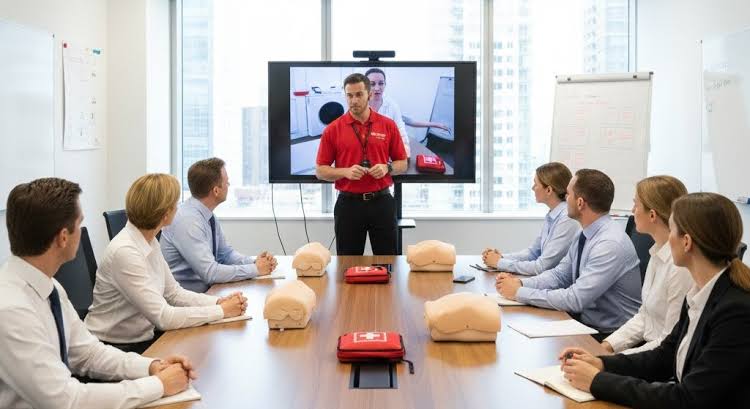
Most of the value comes from the practical part, where participants practise compressions on manikins and run through realistic scenarios.
Making Training Easy for Busy Teams
One of the biggest barriers to workplace training is time away from work. Courses that let staff complete the theory online and then attend a short practical session are much easier to fit around rosters.
On the Gold Coast, Coastal Training College runs this format, with online learning followed by a short hands-on session and a digital certificate issued the same day. Its courses run weekly across six Gold Coast and Northern NSW venues, which makes it easier for businesses to book staff into a CPR certificate Gold Coast session without losing a full day of work.
Practical Steps for Employers
If you are reviewing first aid and CPR in your workplace, start with these steps:
- Check who currently holds CPR training and when it expires.
- Make sure trained staff are spread across shifts and locations.
- Consider whether a defibrillator is appropriate for your site.
- Make sure everyone knows where the first aid kit and AED are kept.
- Set reminders for annual CPR refreshers.
The Bottom Line
A cardiac arrest at work is rare, but the consequences are serious and the window to act is short. Training staff in CPR, and keeping that training current, is a small investment that can make an enormous difference. It protects your people, supports your safety obligations and gives your team the confidence to step in when it matters most.

