
Your front door might look formidable, and that mere fact might provide you with a feeling of comfort and safety. However, for many, the mere assumption that a locked door equates to a secure home is a dangerous misconception.
The truth is that even when a door is physically bolted, it may still be susceptible to methods that require little force, minimal noise, and surprisingly short time.
Here’s why burglars still enter homes despite locked doors and why you must abandon the false sense of security and take active steps to ensure genuine and robust protection.
The Illusion Of Safety That A Standard Lock Gives
When we turn a key or lift a handle to lock our doors, we are relying on a complex mechanical system. In many British homes, particularly those fitted with modern uPVC or composite doors, this system is a multi-point locking mechanism. While sophisticated, it is not infallible.
A common vulnerability—and one that has become well known to opportunistic intruders—is lock snapping.
This technique exploits a specific design flaw in the standard euro cylinder locks often installed by default. Because these cylinders are made of brass and have a central fixing screw, they can be a point of weakness.
If the cylinder is not anti-snap-rated, a burglar can use simple tools to apply leverage to the protruding part of the lock, causing the cylinder to break.
Once the cylinder snaps, the locking mechanism is exposed and can be manipulated in seconds. Relying on such a lock, even when “locked,” is akin to leaving the door ajar for someone with the right knowledge.
The Weakest Link Is Often The Frame
The focus on the lock mechanism itself often causes homeowners to overlook the environment in which that lock lives: the door frame.
You could have the most expensive, high-security lock on the market, but if it is attached to a flimsy frame, it will not hold up under pressure. Many door frames are made of relatively soft wood or are inadequately secured to the structural wall.
Burglars often do not bother with the “lock” at all, but opt for forced entry–they kick the door near the lock. If the strike plate is held in place by short, superficial screws, the wood will splinter and give way long before the bolt itself fails.
A truly secure door requires reinforcement that extends beyond the hardware to the structural integrity of the frame, ensuring that the force of a potential impact is distributed across the wall rather than concentrated on the lock housing.
Most Neglected Secondary Entry Points
Intruders are rarely fixated on the front door if they believe there is an easier way inside. While the front door is the most visible point of access, back doors, patio doors, and garage entrances are often significantly less secure.
Sliding glass doors, for instance, are notoriously difficult to secure with factory-standard latches. Many of these doors can be lifted off their tracks or simply pried open with a crowbar because the locking mechanism does not engage deeply enough with the frame.
Similarly, conservatory doors and rear entrances are frequently hidden from street view, providing the privacy an intruder needs to work without being spotted by neighbours.
If your home security plan focuses solely on the front entrance, you may be creating a false sense of security that ignores the very areas where an intruder is most likely to attempt entry.
The Role of Habits and Social Engineering
Sometimes, the security of a door is not compromised by a lack of hardware, but by a lack of caution. It is a common trait to assume that if we are just stepping out for a moment or working in the back garden, our home is “safe enough.”
Burglars are observant, and they watch for these patterns. They note the household’s daily routines, identifying when the house is empty or the homeowner is distracted.
Beyond this, there is the issue of “hidden” keys. Under the doormat, inside a flower pot, or tucked behind a loose brick—these are not secrets. They are common knowledge in the criminal world.
Even more sophisticated is the rise of social engineering, where strangers might pose as utility workers or surveyors to gain information about your home’s security, or simply to get a closer look at the types of locks and doors you have installed.
Identifying Your Personal Security Gaps
Because every home is unique, there is no “one-size-fits-all” solution to home security. The requirements for a Victorian terrace with original wooden doors are vastly different from those of a modern apartment or a detached house with a sprawling ground-floor layout.
This is why a professional assessment can be so transformative.
By having an expert examine the specific points of failure in your property—the alignment of your doors, the standard of your cylinders, and the integrity of your frames—you can stop guessing.
And, if you are uncertain about the current state of your home’s defences, speaking with reliable locksmiths in Bromley can provide the clarity you need.
They can help determine whether your locks meet the latest insurance standards and suggest upgrades that not only “feel” secure but also perform under duress.
Upgrading To Modern Security Standards
The good news is that the technology available to homeowners has improved significantly, making it harder than ever for intruders to gain entry quietly.
For starters, upgrading to British Standard-compliant locks—such as those marked with the 3-star Kitemark—is one of the most effective deterrents against techniques like lock snapping and bumping.
These locks are designed to withstand significant force and remain functional even if the outer layer is tampered with.
Additionally, sash jammers, hinge bolts, and high-security strike plates can drastically increase the force required to breach a door.
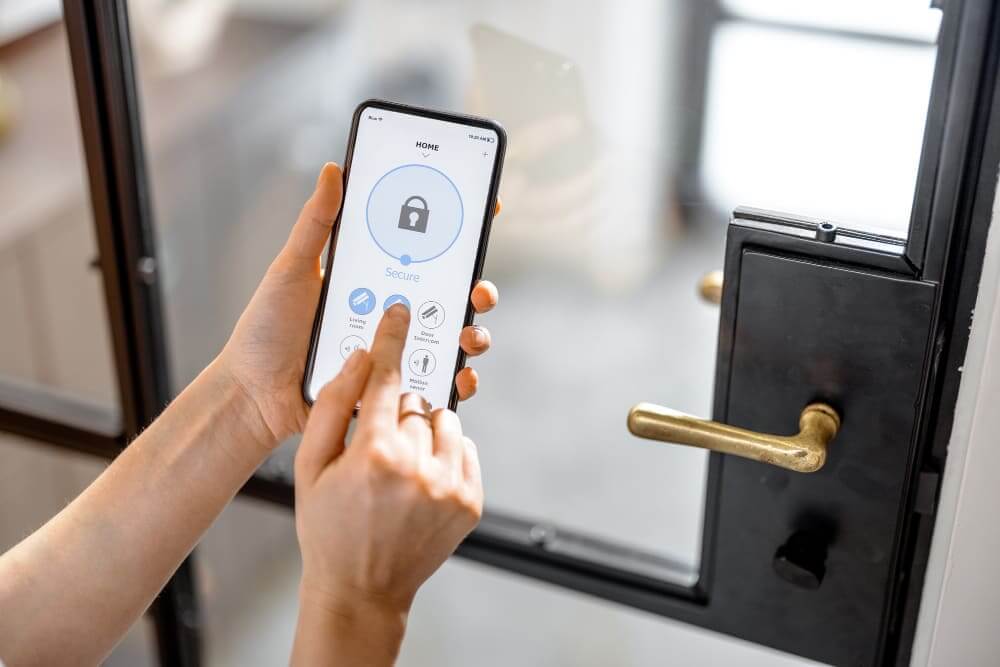
For those looking for more “active” security, modern smart locks offer features such as activity logs, remote locking, and temporary access codes, eliminating the need to leave spare keys under a mat.
The Importance Of Maintenance And Vigilance
Finally, it’s time to realise that security is a changing requirement, not a one-time setup. Over time, houses settle. Wooden frames warp, uPVC doors expand and contract with the heat, and locking mechanisms can become stiff or misaligned.
A lock that is difficult to turn is not just an annoyance, but a sign that the door is not fully engaging, meaning you might be leaving your home insecure without even realising it.
Regular maintenance, such as ensuring that doors close smoothly, handles lift correctly, and keyways are clear of debris, is simply essential.
It is also wise to perform a “security audit” of your home at least once a year. Walk around your property as if you were looking for an entry point. Are your ground-floor windows visible? Is your garage side door flimsy? Does your back gate provide cover?
Addressing these small, manageable issues before they become emergencies is the hallmark of a truly secure home.
Conclusion
A formidable door, even if it’s locked at all times, is only an element of your home’s security. Only when you assess and fix the weak points can you truly feel at peace in your property and that it’s protected.
So, whether you do these things yourself if you have the knack for it, or simply call a reliable local locksmith, the important thing is to address the gaps. That way, you’ll keep your home, your family and the things that matter most to you, truly safe.
Good luck!

Hey, Molar is the voice behind this all-encompassing blog, sharing expert insights and practical advice on business, real estate, and more. Dedicated to helping you navigate the complexities of these fields, Kelly provides the latest trends, in-depth analyses, and creative strategies to elevate your ventures.
